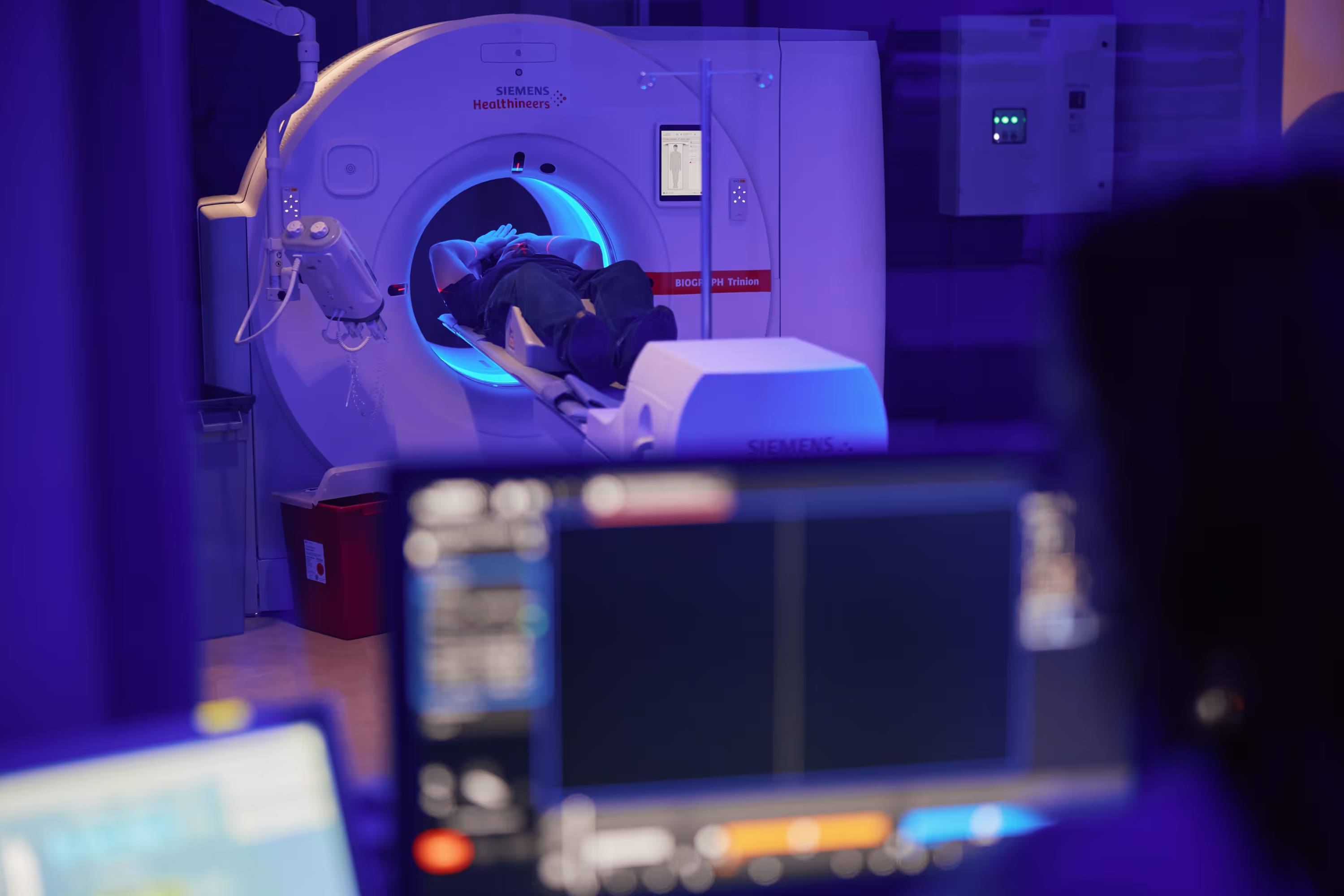
Modern medicine is advancing rapidly, and one of the most exciting developments is the rise of interventional radiology (IR). Interventional radiology uses image-guided, minimally invasive procedures to diagnose and treat a wide range of conditions. For many patients, IR offers a safer, less painful, and more convenient alternative to traditional surgery.
At Iowa Radiology, we believe imaging is only the beginning. Through interventional radiology, our team provides not just pictures, but precision-guided care that helps patients heal with fewer risks and faster recoveries.
What Is Interventional Radiology?
Interventional radiologists use imaging technologies, such as CT, MRI, ultrasound, and fluoroscopy, to guide instruments inside the body through tiny incisions. This approach minimizes disruption to healthy tissue and reduces the need for large surgical openings.
Because these procedures are less invasive, patients often experience shorter hospital stays, quicker recovery times, and fewer complications compared to traditional surgery.
Common Interventional Radiology Procedures
Interventional radiology covers a wide range of treatments. At Iowa Radiology, some of the procedures we offer include:
Cryoablation
Cryoablation uses extreme cold to destroy abnormal tissue, including certain tumors. Guided by imaging, a thin probe is inserted into the tumor, where freezing temperatures kill cancer cells while sparing surrounding healthy tissue. Cryoablation can be an option for patients who are not candidates for surgery or who prefer a less invasive treatment.
Prostate Artery Embolization (PAE)
For men with benign prostatic hyperplasia, or enlarged prostate, prostate artery embolization offers a minimally invasive alternative to surgery. During this procedure, tiny particles are injected into the arteries that supply the prostate, reducing blood flow and shrinking the gland. PAE can relieve urinary symptoms and improve quality of life without the risks of more invasive procedures.
Vertebroplasty & Kyphoplasty
Spinal compression fractures, often caused by osteoporosis, can lead to sudden, severe back pain and reduced mobility. Interventional radiology offers two minimally invasive treatments, vertebroplasty and kyphoplasty, that stabilize fractured vertebrae and relieve pain.
- Vertebroplasty involves injecting medical-grade cement into the fractured bone to strengthen and stabilize it.
- Kyphoplasty uses a balloon to create space in the collapsed vertebra before cement is injected, which can also restore some lost height.
Both procedures are performed through tiny incisions with image guidance, offering rapid pain relief and shorter recovery times compared to traditional surgery.
Benefits of Interventional Radiology
Interventional radiology offers several advantages over traditional surgery:
- Less Invasive. Smaller incisions mean less pain and scarring.
- Lower Risk. Reduced risk of infection and complications.
- Shorter Recovery. Many procedures are outpatient, allowing patients to return home the same day.
- Precise Targeting. Imaging ensures treatment is delivered exactly where it’s needed.
For patients, this means effective care with minimal disruption to daily life.
What to Expect During an Interventional Radiology Procedure
Most interventional procedures are performed under local anesthesia with sedation, rather than general anesthesia. Patients are typically awake but comfortable, and recovery time is much shorter. Before the procedure, your interventional radiologist will explain what to expect and answer any questions. Afterward, most patients can resume normal activities within a few days.
The Future of Interventional Radiology
Interventional radiology continues to grow, offering new treatments for cancer, vascular disease, pain management, and more. By combining imaging expertise with minimally invasive techniques, IR is transforming how patients experience care.
The Iowa Radiology Difference
At Iowa Radiology, interventional radiology is an extension of our belief that imaging is only the beginning. Patients benefit from:
- Subspecialty Expertise. Procedures are performed and interpreted by radiologists with advanced training in interventional techniques.
- Collaborative Care. Our team works closely with referring providers and specialists to ensure each patient’s care plan is personalized and coordinated.
- Advanced Technology. We use state-of-the-art imaging to deliver precise, effective treatments.
- Patient-Centered Approach. We prioritize comfort, safety, and clear communication every step of the way.
Taking the Next Step
If you’re exploring treatment options and want to know whether interventional radiology may be right for you, talk with your provider about a referral to Iowa Radiology. Together, we can determine whether a minimally invasive approach can deliver the answers you need.