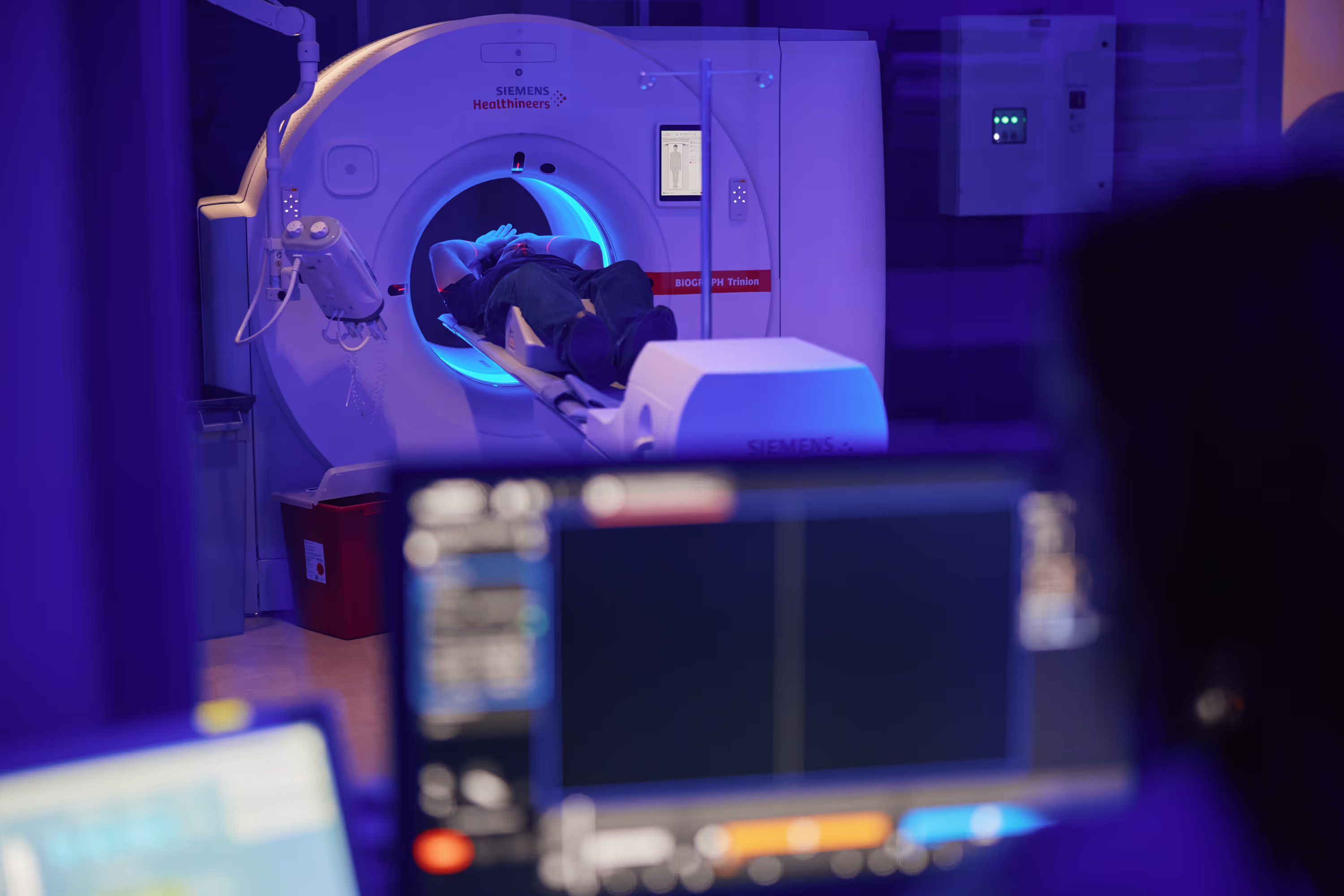
When most people think about radiology, they think about images (X-rays, CT scans, MRIs, or mammograms) that help detect disease. But imaging can also play a direct role in treating cancer. Through the field of interventional oncology, radiologists use advanced imaging technologies to guide minimally invasive procedures that diagnose and treat tumors with precision.
At Iowa Radiology, our radiologists work closely with oncologists, surgeons, and referring providers to deliver insights that guide care–not only in detecting cancer, but also in helping patients access treatments that may reduce risk, ease symptoms, or improve outcomes.
Cryoablation – Freezing Tumors with Precision
Cryoablation is a minimally invasive procedure that uses extreme cold to destroy abnormal tissue, including certain tumors. Guided by imaging, a thin probe is inserted directly into the tumor. Once in position, the probe delivers freezing temperatures that form an “ice ball” around the tumor, killing cancer cells while sparing as much surrounding healthy tissue as possible.
Cryoablation may be used for certain kidney, lung, or bone tumors, as well as some breast cancers. For patients who are not candidates for surgery, or for those seeking a less invasive treatment, cryoablation offers:
- Shorter recovery times compared to open surgery.
- Lower risk of complications since only a small incision is required.
- Effective local control of targeted tumors.
At Iowa Radiology, image guidance ensures that the freezing is delivered precisely where it’s needed. Our interventional radiologists collaborate with oncology teams so that cryoablation is integrated into each patient’s overall treatment plan.
Biopsies – Finding Answers Without Surgery
Before cancer can be treated, it must be accurately diagnosed. That’s where biopsies come in. A biopsy involves removing a small sample of tissue to be examined under a microscope. Today, most biopsies are image-guided, meaning radiologists use ultrasound, mammography, CT, or MRI to precisely locate the area of concern.
At Iowa Radiology, our team performs several types of minimally invasive biopsies, including:
- Ultrasound-guided biopsy, often used for breast, thyroid, or soft tissue abnormalities.
- Stereotactic biopsy, which uses mammography to guide sampling of breast tissue.
- MRI-guided biopsy, ideal for abnormalities only visible on MRI.
These techniques reduce the need for surgical biopsies, allowing patients to avoid larger incisions, longer recovery times, and greater risks of infection.
What to Expect After a Biopsy
Waiting for biopsy results can be stressful. Iowa Radiology prioritizes clear communication and timely reporting, so patients and providers have the answers they need as quickly as possible. In many cases, findings are benign, providing peace of mind. If cancer is detected, the biopsy results give oncologists the information needed to design the right treatment plan.
Why Imaging-Guided Cancer Care Matters
Traditional surgery and systemic treatments like chemotherapy remain important parts of cancer care. But imaging-guided procedures add valuable options, especially for patients who:
- Are not candidates for surgery.
- Have tumors in locations that are difficult to reach surgically.
- Want minimally invasive alternatives with shorter recovery times.
- Need symptom relief as part of palliative care.
At Iowa Radiology, we view interventional oncology as part of a larger commitment: to provide clarity that guides patients and providers through every step of the cancer journey.
The Iowa Radiology Difference in Interventional Oncology
- Subspecialty Expertise. Our interventional radiologists are highly trained in using imaging to perform complex procedures safely and effectively.
- Collaborative Care. We partner closely with oncologists, surgeons, and referring providers to ensure each patient’s treatment plan is seamless and personalized.
- Patient-Centered Approach. From explaining procedures to delivering results quickly, we focus on reducing uncertainty and helping patients feel supported.
- Advanced Technology. We use state-of-the-art imaging to guide procedures with the greatest possible precision.
Moving Toward Personalized Cancer Care
Cancer treatment is evolving rapidly, with more options than ever before. Interventional oncology represents a shift toward personalized, less invasive care that aims not only to extend life, but also to improve its quality.
If you or a loved one is facing a cancer diagnosis, ask your provider whether imaging-guided procedures at Iowa Radiology could play a role in your treatment plan. With expertise, collaboration, and a commitment to delivering insights that guide care, we’re here to help patients and providers navigate cancer with clarity and confidence.